The island of Krk is the most northerly island on the Mediterranean and is located in the Kvarner bay. It is the largest island on the Adriatic with a surface area of 409.9 km2. Around twenty small islands, cliffs and reefs are located around the island. Krk is the island with the highest number of inhabited villages, 68 in total. The number of inhabitants on the island today is 19 383 ( 2011 census).
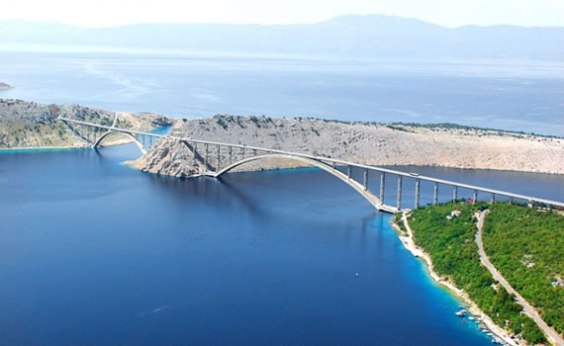
Climate, flora and fauna: The island of Krk is located in a moderate and mild Mediterranean climate zone. The average summer temperature is 23 oC, the average sea temperature in the period from June to September is 20 oC. The most frequent winds are the bura, jugo and maestral. So on the north and south-eastern part of the island the jugo blows more frequently, and in part of the central and northern part of the island the bura prevails.
The island of Krk is included amongst the sunniest parts of Europe with 2500 hours of sun per year. The variety of relief and favourable climatatic conditions have contributed to the development of almost 1400 different plant species. In the central and western part of the island forests and cultivated cultures of Mediterranean fruit and vegetables prevail, with vineyards and olive groves. The north and south part of the island is marked with rocky land and pasture. The specificity of Krk’s landscape is its terrace shaped walls (gromače) and shepherd’s mrgarwhich have been conserved on the limestone plateaus above the Baška valley.
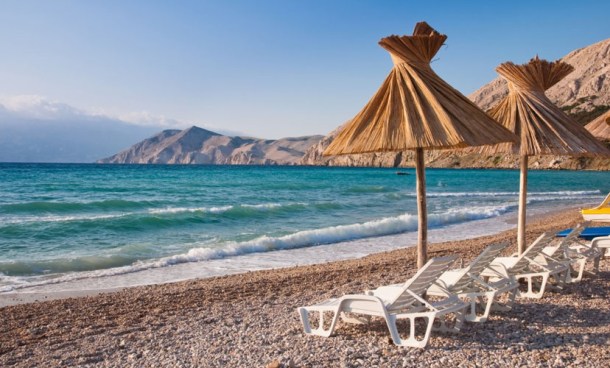
The city of Krk
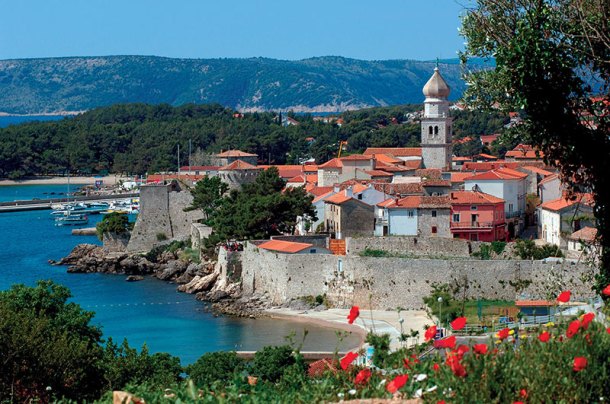
In fact, Christianity came into the city in an early period, which is proved by the Iliric epitaphs. The old city centre is reachable through the four doors, and out of the city walls, the city was only developed more intensely over the last few centuries. The city walls with their doors had already been erected in the pre Roman period and have remained in the same place until today, even though they have been reconstructed many times, they have always established the interior city arrangement.
We can already see traces of catering from the early Middle Ages in the city of Krk, and its first guests were Czechs. From that period until today Krk has become, with the number of its hotels and camp-sites, a very strong centre even at wider European levels.
The city of Krk is today the administrative, political, economic and religious centre of the island of Krk.
For more info visit: www.krk.hr
 Sesar Apartments - Island Krk - Croatia